









 Release Date:2026-09-11
  Click on the quantity:15
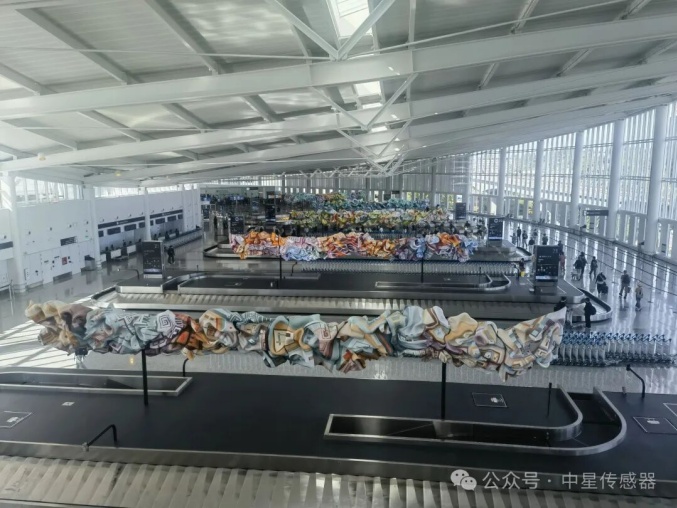
In the afternoon of September 7 (Beijing Time), I departed from Xi'an Xianyang International Airport on an Asiana Airlines flight. After nearly three hours of travel, I arrived at Incheon Airport in South Korea and waited for around four hours in the terminal for my connecting flight. The subsequent flight took roughly ten hours, landing in Seattle on the US West Coast, close to the Canadian border.
I rented a car and headed to my destination, Portland. The journey was less than 300 kilometers. On the way, I followed Google Maps to a restaurant named Gongfu of Noodles in the small town of Longview, only to find it closed.

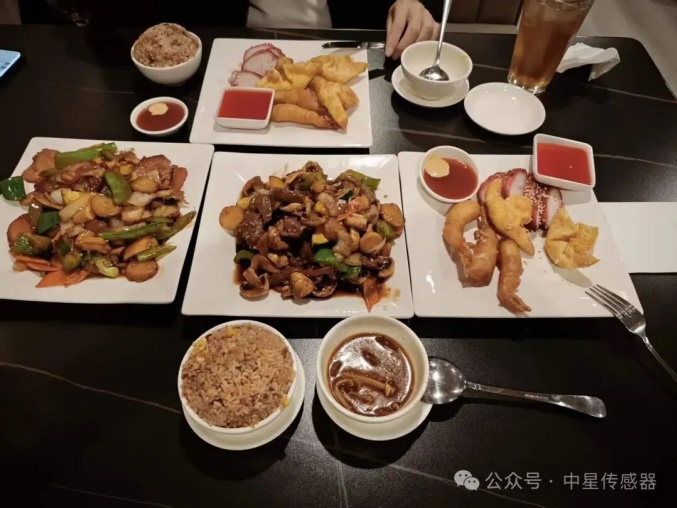
I later wondered if the closure was because September 7 was Labor Day in the United States. With no other options and feeling quite hungry, I searched for another nearby restaurant run by Cambodian owners serving Chinese food. The ingredients were decent, yet the taste left much to be desired. Even so, an 18% minimum service charge still applied. Regardless, it solved my most immediate problem of hunger.
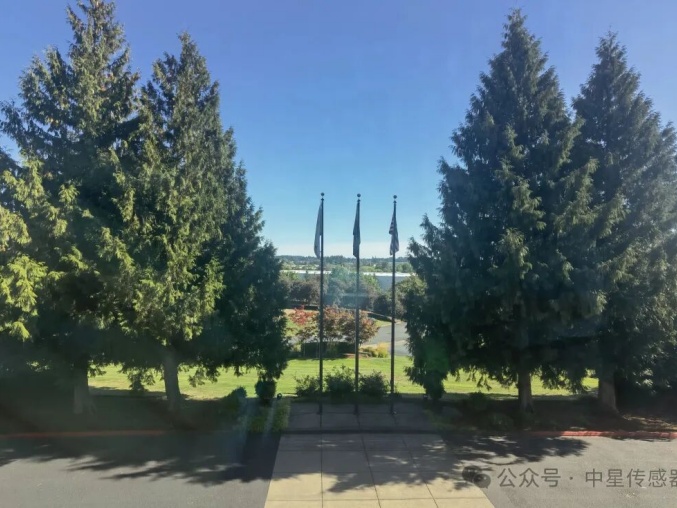
This was my second visit to Seattle. What impressed me on my first trip was the white clouds hanging low over the horizon. This time, driving from Seattle to Portland, I was struck most by the green trees, forests and lakes lining both sides of the highway. I finally checked into the booked hotel at around 9 p.m., which was nestled amid lush green woods.

The main purpose of this US trip was to visit a well-known international company, Company S. It supplies pressure, differential pressure, gas, displacement and other types of sensors as well as corresponding solutions for smart energy and smart building sectors worldwide, and is a major sensor supplier near Seattle, USA.
Over two days of factory tours, on-site inquiries and in-depth discussions in their offices, I gained clear insight into the manufacturing gaps between most small and medium-sized sensor enterprises in China and overseas sensor manufacturers. Their manufacturing processes, equipment and production philosophies from 20 years ago still remain advanced standards in China today. Some of their practices are worth learning from, yet others are hard to replicate given the prevailing management capabilities and maturity of upstream and downstream partners among small and medium Chinese sensor firms.
Take the differential pressure transmitter as an example. Provided all incoming materials — including PCBA boards, plastic housings, sensing elements, cables, various fasteners, LCD display panels, seals, labels, marking stickers, plastic bags and packaging boxes — meet quality requirements, a single operator can finish all assembly procedures and tests at a U-shaped workstation to produce finished qualified products. No final product inspection is required, and goods can be sent directly to the warehouse. With this workflow, the product defect rate has been kept below 1500 PPM for years.
At Chinastar M&C, this same workload would normally require 3 to 4 operators, plus QC staff for in-process and final inspections.
Three core reasons account for this difference.
First, strict quality assurance of incoming materials maintains an extremely low defect rate.
Second, an integrated inspection, calibration and measurement system underpins high-efficiency production. This system consists mainly of high-precision pressure controllers, high-accuracy multimeters, power supplies and computer systems, and it directly controls five label printers. It verifies components and overall performance of PCBA boards, and independently conducts inspection, calibration and re-verification for sensors. All quality checks rely on automated equipment and systems to eliminate human interference and improper manual operations.
Third, customized fixtures and test jigs are designed to prevent operator errors, namely the error-proofing mechanism we often refer to.
You can see the whole picture from one small segment. Small and medium-sized sensor companies in China still have a long way to go to catch up with Western manufacturing standards. We may not need to scale up into a giant enterprise, yet we can become highly competitive by learning from advanced overseas counterparts. Comparison enables discrimination; discrimination sparks ideas; ideas demand actions; and actions must deliver tangible results. That is one of my key takeaways from this study tour.


