









I flew from Wuxi to Shenzhen in the early hours of April 13, the night before last. As soon as I stepped out of the airport, I felt a wave of heat. I took off my coat and wool sweater, but still felt hot even in just my shirt. I didn’t get to the hotel until 1 a.m. Yesterday, I attended several meetings from 10 a.m. to 8 p.m. at the Crowne Plaza Shenzhen Futian. I met many old and new friends in the sensor industry, as well as followers of my WeChat official account *Brother Gu’s Sensing & IoT* and fans of my Douyin show *Chatting Sensors Lightly*. Gathering with old and new friends, exchanging information about sensing technologies and business developments, was truly delightful.
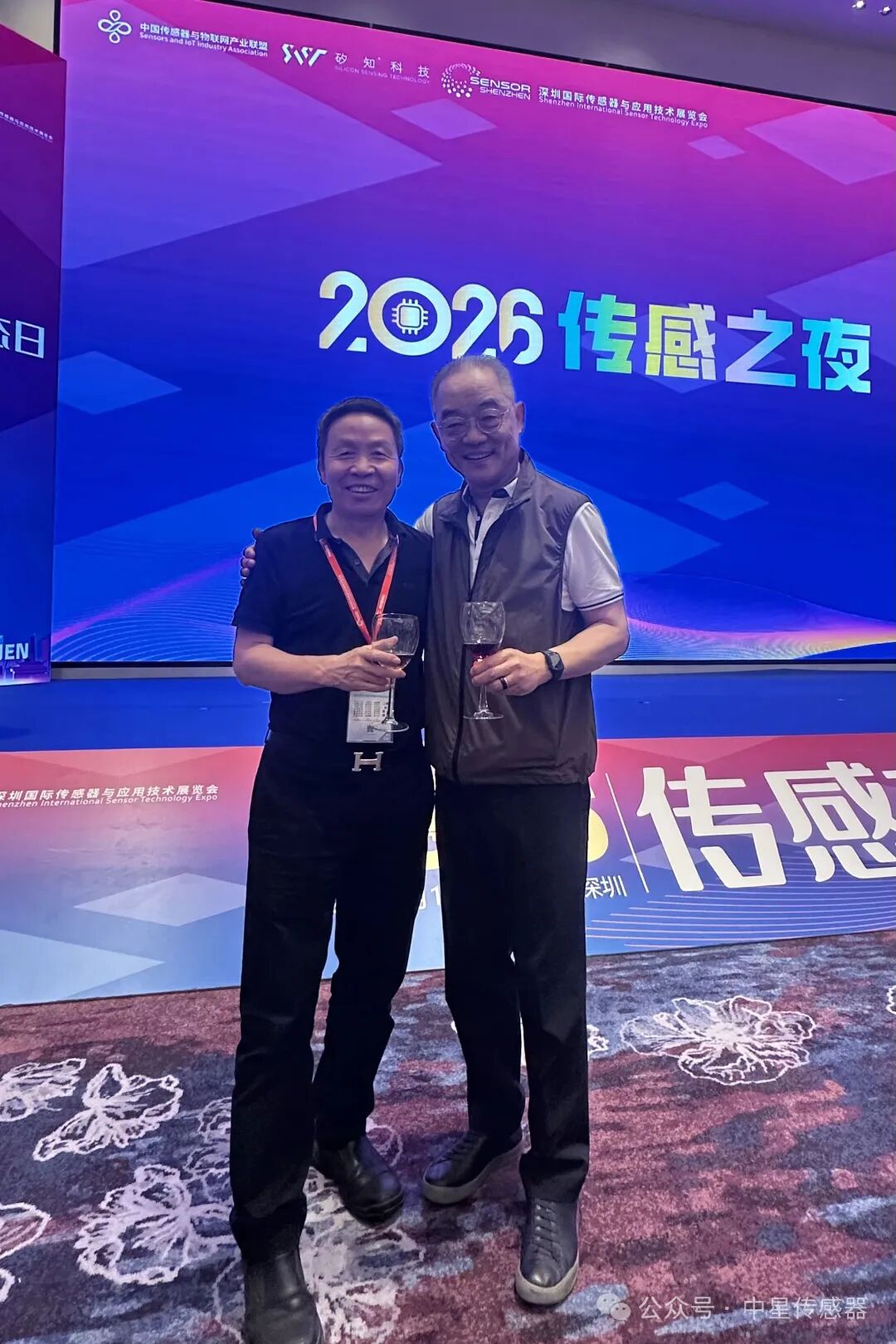
Ten years ago, in 2016, in a conference room at the Shenzhen Futian Exhibition Center, the China Sensor and Internet of Things Industry Alliance was officially established. It was initiated by Academician Wang Xi, then Director of the Shanghai Institute of Microsystem and Information Technology, Chinese Academy of Sciences — now a member of the Standing Committee of the Guangdong Provincial Party Committee and Minister of the United Front Work Department — and approved by the Ministry of Industry and Information Technology. I was there in person. Back then, there were only a few dozen people, and it did not attract much attention. Ten years later, according to official reports, the alliance now has more than 1,500 members and has set up over a dozen professional committees, hosting numerous events each year. The Sensor Shenzhen International Exhibition is one of its most representative activities.
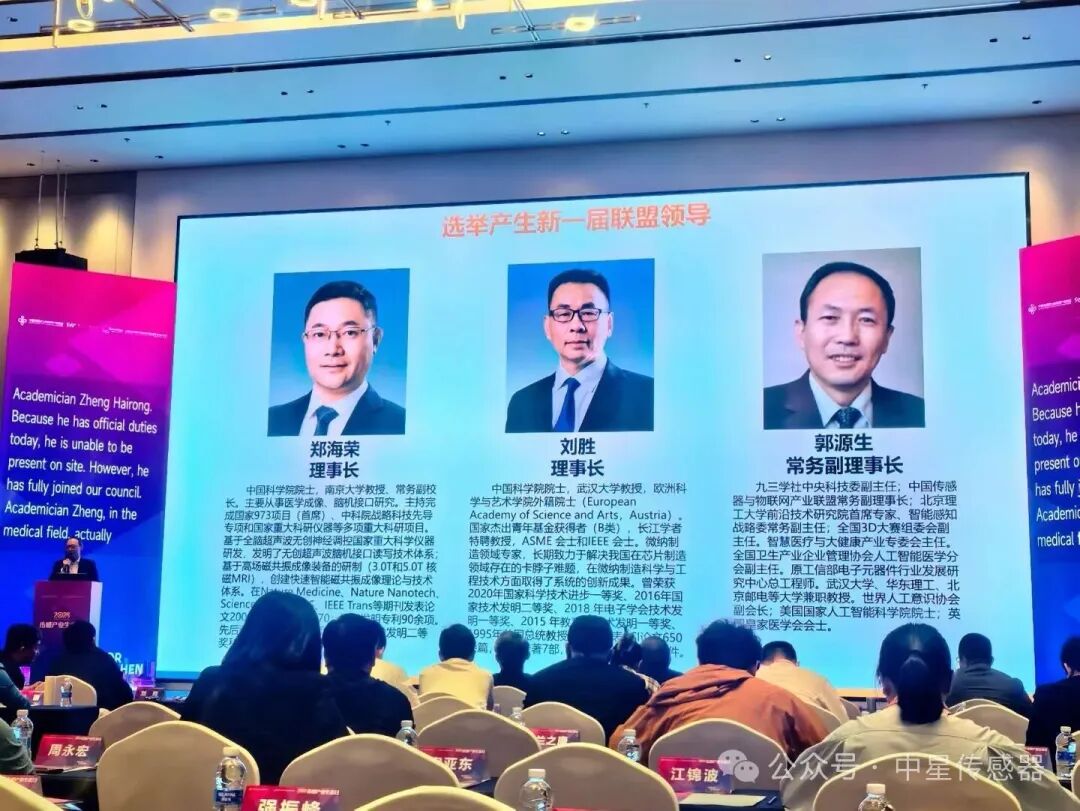
At the 3rd Council Election of the China Sensor and Internet of Things Industry Alliance, two chairpersons were elected: Professor Zheng Hairong, an academician of the Chinese Academy of Sciences from Nanjing University, and Professor Liu Sheng, an academician of the Chinese Academy of Engineering from Wuhan University. This is the highest academic caliber, and it is the first time I have witnessed two academicians serving jointly as chairpersons. My old friend, Mr. Guo Yuansheng, a renowned evangelist and master expert in China’s sensor industry and Deputy Director of the Science and Technology Committee of the Jiusan Society, was re-elected Executive Vice Chairperson. Mr. Yang Xiao was also re-appointed Secretary-General.
#2024.04.14 09:18 Wyndham Grand Shenzhen#
This morning, I held a video conference at the hotel with one of Chinastar M&C’s Fortune 500 clients, connecting participants from the US, Shanghai, Xi’an, and Shenzhen. We focused on responding to changes in international trade and exploring ways to jointly expand overseas markets. This is both a major strategic choice and a huge challenge for Chinastar M&C.
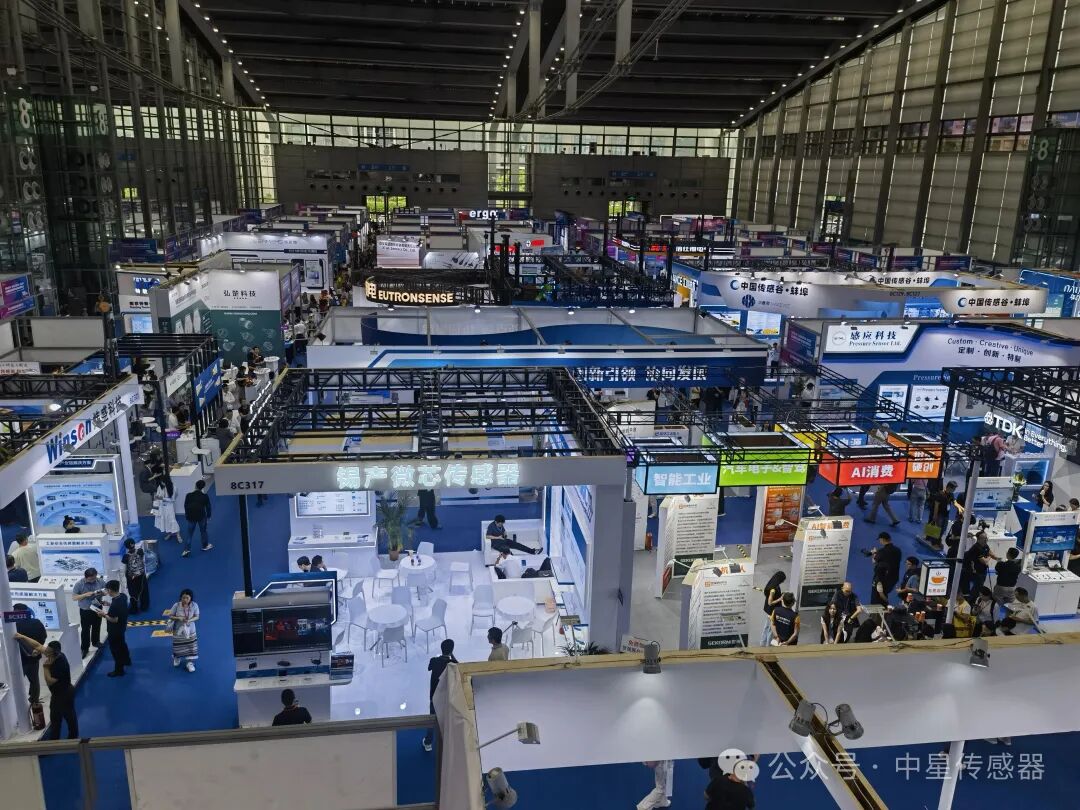
After the meeting, I hurried to the Shenzhen Futian Exhibition Center. It was the first day of Sensor Shenzhen 2026, and the venue was crowded with visitors. According to reports, more than 600 exhibitors are participating, including many well-known international companies. If so, the number has already exceeded that of SENSOR+TEST in Nuremberg, Germany, over the past three to four years. I am optimistic that, in a few more years, the number of exhibitors in Shenzhen will surpass that of the German show every year, making it the largest sensor exhibition in the world. This is truly thanks to the rapid development of Chinese enterprises.
While talking with a representative from a foreign peer company, he told me that he had seen Chinastar M&C’s booth at many overseas exhibitions and thought our products were excellent. He asked why our unit prices were set so low and why we did not charge more. With environmental, CE, and UL certifications, we could definitely command higher prices, he said. I had to reply helplessly: of course we want higher prices, but European and American customers naturally assume Chinese products should be low-priced. If we charge more, they are unwilling to accept it and will turn to other Chinese suppliers for lower prices, pushing down the price of our high-quality ChinaStar products. Meanwhile, some domestic exporters do quote extremely low prices to secure orders, even to an unbelievable degree
I cannot help wondering: will our niche pressure sensor market also face claims of overcapacity from Europe and the US, just like China’s new energy vehicles and solar panels? This is a question that all Chinese sensor manufacturers should reflect on — neither too big nor too small, neither too early nor too late, yet difficult to resolve. (I chatted with friends over tea in the afternoon and evening, and could not fall asleep, so I wrote down these thoughts.) #2026.04.15 01:48 Wyndham Grand Shenzhen#
Yesterday, at our company booth, I met many industry friends and fellow exhibitors. Some kept asking me: which exhibition is more effective — Sensor Shenzhen or Sensor China in Shanghai? The answer depends entirely on each company’s product positioning and target markets. It is a matter of opinion and hard to judge definitively.
At noon yesterday, I formally introduced Chinastar M&C’s own products on camera for the first time since I started releasing my short-video series *Chatting Sensors Lightly* in early February. Episode 74 is less than three minutes long. After 22 hours online, views across my video account and Douyin totaled fewer than 4,000, with under 100 likes. It is still difficult to build influence, and I will keep working harder.
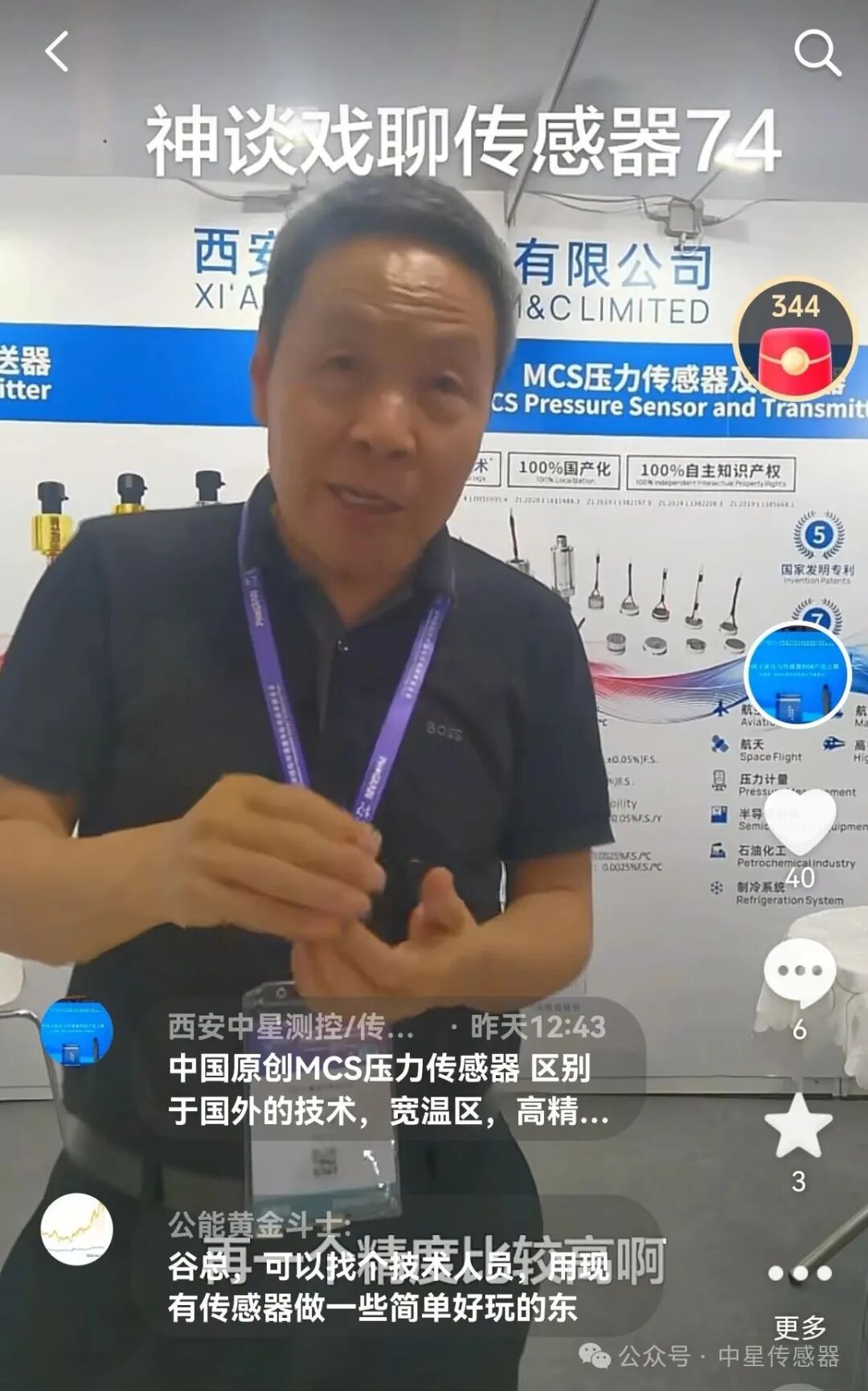
My Douyin channel *Chatting Sensors Lightly* focuses on explaining basic sensor principles and their applications in different environments and equipment. Each episode is under five minutes, as longer videos require more time to engage viewers. Many friends and fans have suggested I collaborate with professionals, but I simply do not have enough time. Instead, I talk casually about various sensors and their applications wherever I go and whatever I see.
Yesterday afternoon, I briefly visited Phoenix Square in Guangming District to learn about the Shenzhen Guangming Sensor Industrial Base. According to Chairman Jiang of the industry association, Shenzhen is now home to more than 600 sensor-related companies, with Guangming District as the core cluster. From my observation, the area has changed significantly compared to last year, with noticeably more foot traffic. Dear readers, do you think Guangming District is a good place for developing the sensor industry in Shenzhen?
I rushed from Guangming District to a café in Futian, where I met a newly acquainted investor, Mr. Liu, for tea. Combined with tea earlier at Phoenix Square, I did not return to the hotel until 11 p.m. The caffeine kept me awake until 3 a.m.
This morning, I continued visiting the exhibition to learn and observe. #2026.04.15 10:02 Wyndham Grand Shenzhen#


