









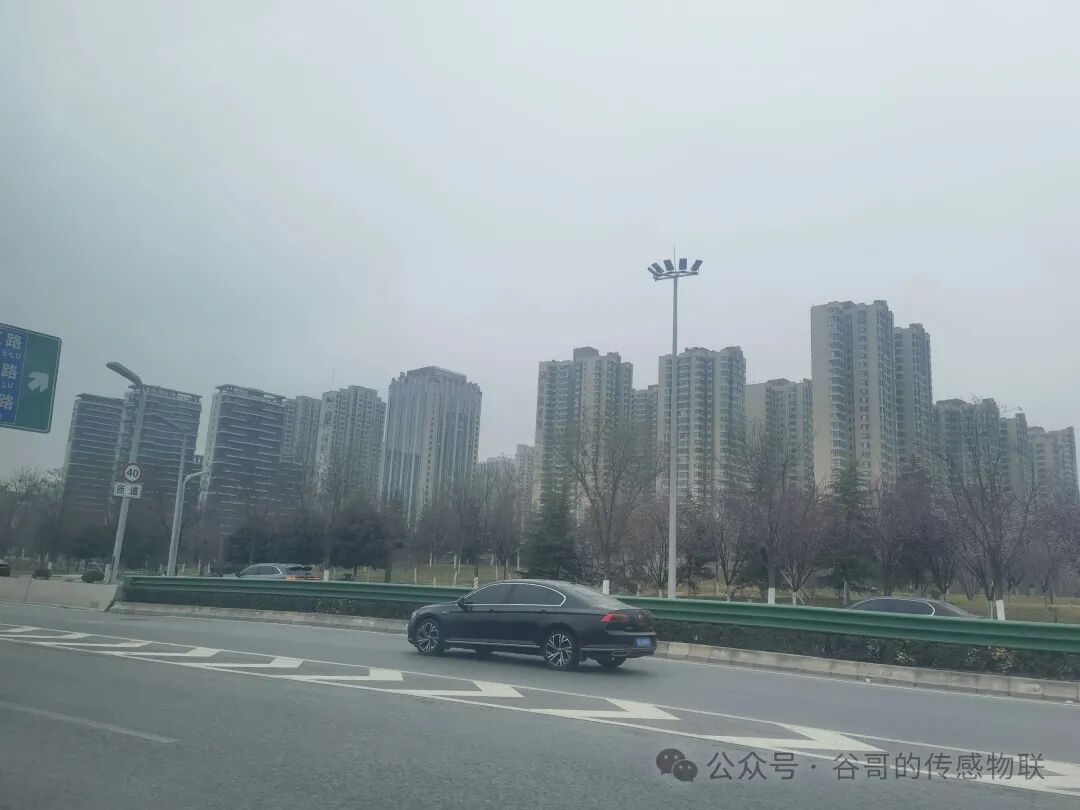
It’s Sunday today, and Xi’an is still overcast. Although spring has arrived, the flowers by the roadside don’t look so vibrant in this gloomy weather. I’ve been back in China for just two days, and today I’m heading to Chongqing for a meeting of the Sensor Branch of the China Instrument and Control Society.
Right now, I’m sitting in the China Eastern Airlines lounge. Thinking back to last week in Germany, during my customer visits, I came across a sensor-related problem for which I haven’t yet found a better, more optimal and cost-effective solution. I’m writing about it here in case any expert readers can offer or recommend a better approach.
This is a problem of measuring water level using a pressure sensor. As many in the sensor field know, there are two common ways to measure liquid level with pressure sensors:One is the immersion type, where the pressure sensor/transmitter is placed at the bottom of the liquid to be measured.The other is to mount the pressure sensor at the bottom of the container. In short, the basic principle is converting pressure through the density of the homogeneous liquid to achieve measurement.
Both methods require a low-range pressure sensor chip to ensure decent measurement accuracy. However, there are no stable domestic manufacturers for low-range pressure sensor chips. For instance, a 1-meter water level corresponds to a 10 kPa pressure sensor chip, most of which are still supplied by TE Connectivity from Switzerland.
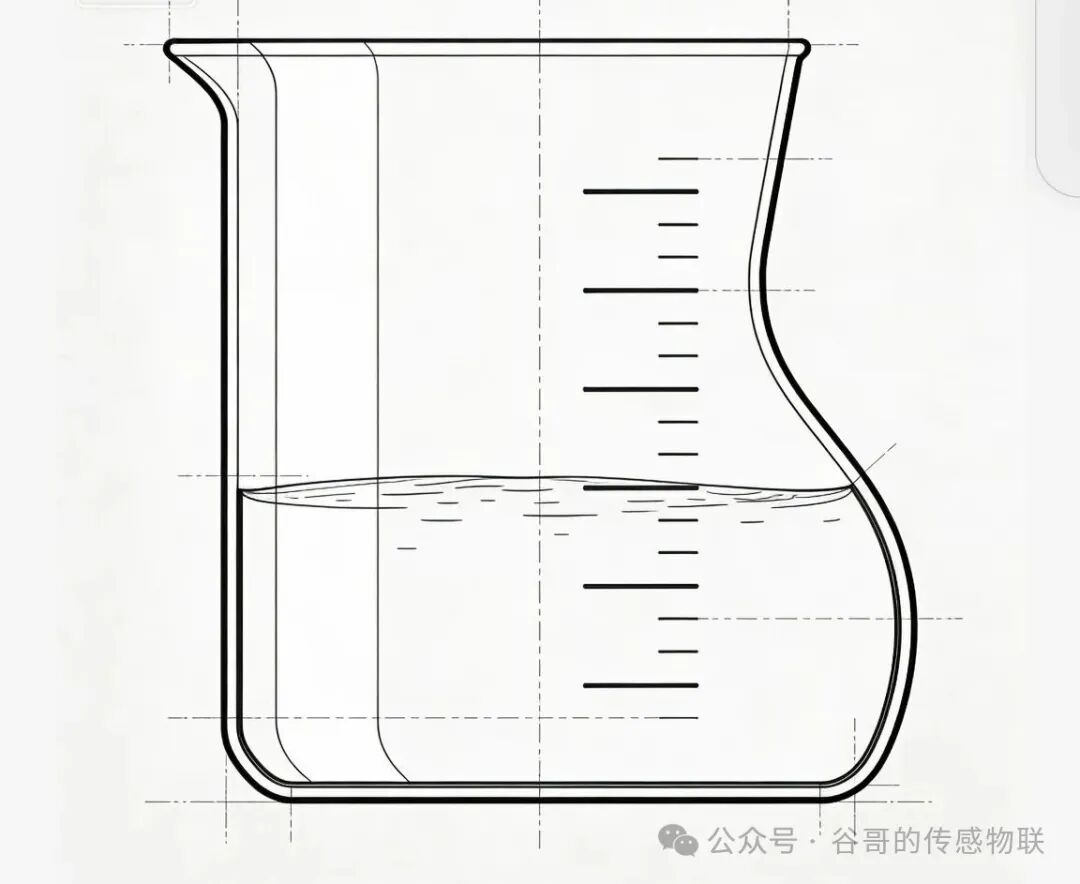
Besides the low range of only 0.8 meters of water, the customer has another issue: the container is not a standard, regular-shaped vessel. In cross-section, part of the container is higher and another part is lower, yet the water level still needs to be accurately measured. (I tried using Doubao to draw a diagram, but it didn’t turn out exactly as I imagined—still, I’m impressed with how well Doubao performed.)A measurement accuracy of 0.25% would be ideal.
As I write this, I suddenly recall that a drone manufacturer once faced the same problem with fuel level measurement. The drone’s fuel tank was not only irregularly shaped but also flexible (not rigid), and its shape could change during flight. We had no solution for measuring its fuel level at that time.
Let me summarize the customer’s requirements clearly:
Measure water level up to 0.8 meters, threaded mounting at the bottom of a metal container, operating temperature: -20°C to 85°C.
Accuracy: 0.25%, output: 0.5–4.5 V.
Due to the irregular container shape, the system must also calculate water volume—not just height, but actual capacity.
Total cost controlled within 120 RMB.
Experts in the industry are welcome to share valuable suggestions, solutions, or relevant products with me.oday at the China Eastern lounge in Xianyang International Airport, I ran into Avicii, a popular Xi’an influencer with tens of millions of followers. He interviewed me in the same lounge last November, and the short video he posted on Douyin gained hundreds of thousands of views with great feedback. I was in a hurry to catch my flight, but we still chatted about sensors and artificial intelligence for a few minutes. I really admire his passion and professionalism.
I hurried to the boarding gate, only to be sent back to the lounge due to a delay.Flight MU2267 from Xi’an to Chongqing, originally scheduled to depart at 15:25, is now delayed until an estimated 18:00. It’s still uncertain whether it will take off at all.Fortunately, I finished a short official account article and recorded a Douyin video. Promoting sensors and the Internet of Things in my spare time is one of my hobbies, and it makes waiting feel worthwhile.
# 2026.03.08.17:28 China Eastern Lounge, Xi’an Airport #


